

How to choose a dish drying rack
A dish drying rack is a small thing that decides whether the kitchen feels finished after washing up. Here is how to choose one that fits your sink, your counter space and the way you wash.
Key takeaways
- Start with where it will stand
- Capacity: count your plates
- Drainage is the whole point
- Stainless steel vs plastic
Start with where it will stand
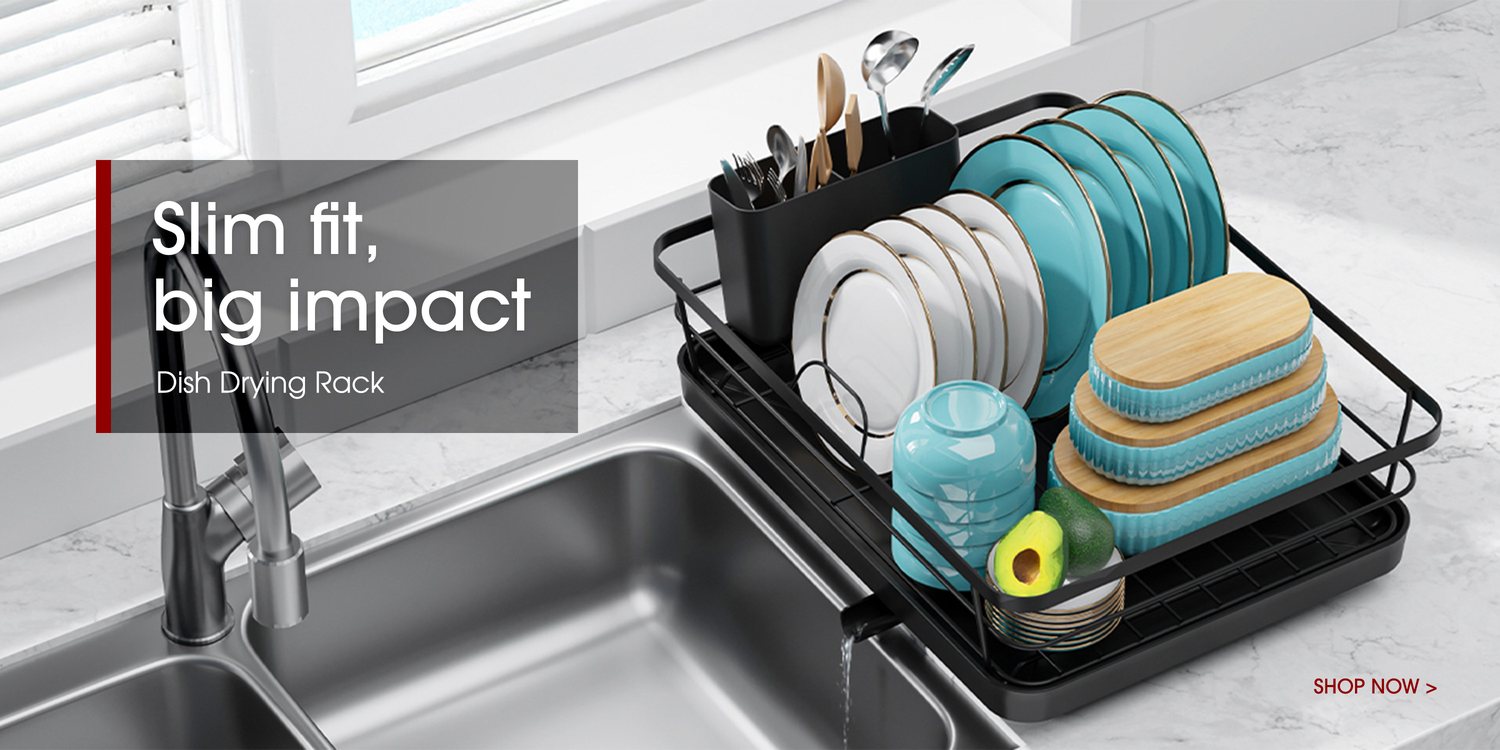
There are four kinds of dish rack. A countertop dish rack sits beside the sink with a drip tray underneath. A 2-tier rack stacks plates above bowls and cups to save counter space. An in-sink dish rack is expandable and rests across or inside the basin. An over-the-sink rack stands over the whole sink on legs and adds shelves above. Measure the counter, the sink width and the faucet height before you choose.
Capacity: count your plates
A compact stainless steel dish rack holds around six plates plus bowls, glasses and utensils — enough for one or two people. Families who wash by hand every night usually want a 2-tier rack or an over-the-sink rack with a large dish basket. If you often wash pots and pans, look for a wide lower basket or a frame that leaves room beside the rack.
Drainage is the whole point
The drip tray catches water, and a swivel spout aimed at the sink sends it away. Without drainage the counter stays wet and the rack becomes a puddle. A removable tray is easier to clean. Over-the-sink racks skip the tray entirely because every drip falls into the basin.
Stainless steel vs plastic
Stainless steel dish racks resist rust and staining, hold their shape and last for years; a coated finish in black, white, gray or silver wipes clean. Plastic racks are light and dishwasher-safe but warp and hold onto grime. For a rack that is used every day, stainless steel is the better material.
Small features that matter
A divided utensil holder sorts flatware as it dries. Wine glass and cup holders keep stemware upside down and steady. A cutting board slot and knife block keep sharp edges off the plates. Non-slip feet stop the rack sliding on a wet counter.
How to clean a dish rack
Empty the tray, wash the rack and tray with warm soapy water and a brush once a week, rinse, and air-dry. A little white vinegar lifts hard-water spots. Dry the tray after heavy use to keep mildew away. How often should you replace a dish drying mat? Every few months — which is one more reason a rack with a tray is the better buy.
FAQ
Do you really need a dish drying rack?
If you wash by hand, yes: plates dry faster and more hygienically upright than on a towel or mat.
What's the best way to hide a dish drying rack?
Choose an in-sink or over-the-sink model, or a slim folding rack that stores in a cabinet between washes.
Shop dish drying racks

Dish Racks
Sakugi 2-Tier Dish Drying Rack with Cutlery Holders
15" x 11.4" x 15", Black
4.3 (5,878)